

Imagine a world where lightweight yet incredibly strong materials are easily crafted into custom designs. Welcome to the realm of carbon fiber 3D printing. Yes, it sounds like the future, but it’s here now, revolutionizing how products are made. Don’t worry, this isn’t just for rocket scientists and aerospace engineers: it’s becoming accessible to many industries. So sit back, relax, and let’s jump into this fascinating technology that’s literally reshaping the manufacturing landscape.
What Is Carbon Fiber 3D Printing?
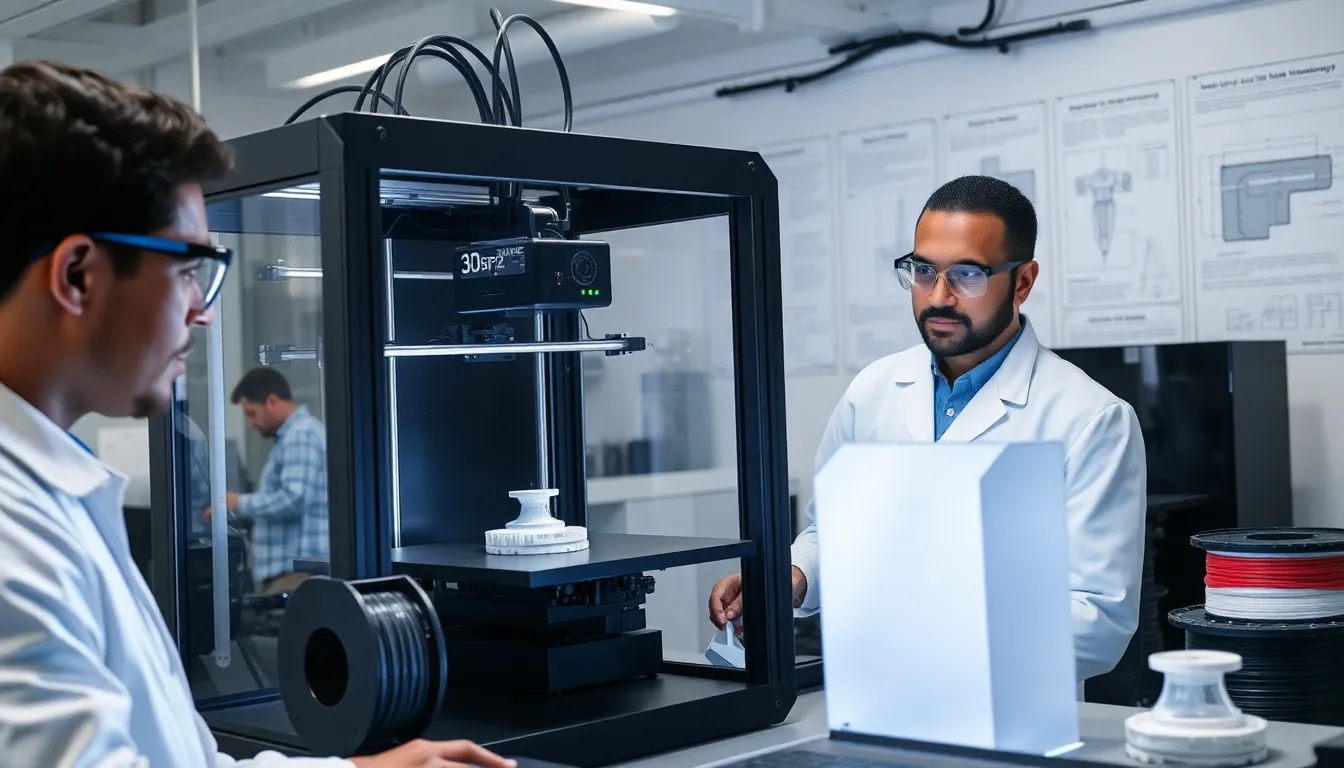
Carbon fiber 3D printing refers to the additive manufacturing process that incorporates carbon fiber into the printing material, enhancing its strength and rigidity without significantly increasing weight. This process commonly utilizes filaments that contain chopped carbon fibers mixed with a plastic base, typically thermoplastic materials. When printed, these fibers create a composite structure that’s not just strong but also surprisingly lightweight. The implications of this technology are vast, touching everything from prototypes to end-use parts in various industries.
Advantages of Carbon Fiber 3D Printing
The advantages of carbon fiber 3D printing are compelling. First and foremost, the enhanced strength-to-weight ratio is a game changer. Products can be made lighter, improving efficiency without compromising durability. Companies can decrease shipping costs and increase fuel efficiency, who doesn’t love saving a buck?
Also, carbon fiber composites offer excellent resistance to chemical and temperature variations. This means parts can endure harsher environments without failing. Also, the speed of production is notable: 3D printing reduces the time required for prototyping. The iterative design process becomes faster and more efficient, allowing businesses to bring products to market sooner. Finally, the reduction of waste in the additive manufacturing process ensures that environmental impact is minimized, appealing to eco-conscious consumers.
Applications of Carbon Fiber 3D Printing
Carbon fiber 3D printing finds its home across numerous industries. In aerospace, for example, manufacturers produce lighter components for aircraft that enhance fuel efficiency. The automotive industry is likewise capitalizing on this technology, crafting lighter parts that improve vehicle performance.
In the sports equipment sector, you’ll find carbon fiber 3D printing in high-performance bikes and tennis rackets, offering athletes an edge in their respective pursuits. Healthcare isn’t left behind either: custom prosthetics and orthotics can be tailored quickly and affordably, leading to better fits for patients. The adoption of this technology in the fashion industry has also started to make waves, with designers creating unique pieces that blend functionality with a modern edge. The potential applications seem endless.
The 3D Printing Process for Carbon Fiber
The 3D printing process for carbon fiber starts with computer-aided design (CAD). Designers create a digital model that outlines the part’s specifications. This model is then sliced into layers tailored for printing. Once prepared, the process typically employs a method known as Fused Deposition Modeling (FDM).
In FDM, a spool of carbon fiber-enhanced filament is fed through a heated nozzle that melts it. The printer lays down layer upon layer according to the sliced design until the object is complete. The result? A tightly woven mesh of carbon fiber strands set within a thermoplastic matrix, lending impressive strength to the final product. Post-processing might be necessary, such as support removal or additional coating for finish and durability.
Challenges and Limitations of Carbon Fiber 3D Printing
Even though its many advantages, carbon fiber 3D printing isn’t without challenges. One primary concern is the cost of materials. Carbon fiber filaments can be expensive compared to conventional materials, which may deter small businesses from making the switch.
Another hurdle is the specialized equipment required. Not all 3D printers can handle carbon fiber composites: hence, investments in advanced machinery may be necessary. The printability of the filament itself can also pose issues, particularly with fiber clogging the nozzle. Finally, while the technology is advancing, the production speed for large objects can still lag behind traditional manufacturing methods, making it less efficient in certain scenarios.
Future Trends in Carbon Fiber 3D Printing
Looking ahead, the future of carbon fiber 3D printing holds incredible promise. Innovations in materials science may lead to new formulations that further enhance the properties of carbon fiber composites, making them even lighter and stronger.
We can expect improvements in printing techniques that increase the speed and efficiency of the process, potentially opening doors to larger-scale manufacturing. Automation and AI will likely play a significant role, optimizing design and production for greater output. As the technology becomes more refined, regulations may evolve, ensuring that carbon fiber parts adhere to safety standards while still pushing the boundaries of innovation. Sustainability practices will likely grow, with more companies focusing on eco-friendly materials, contributing to a greener manufacturing future.

