

Have you ever found yourself stuck in traffic, dreaming of a world where you could glide effortlessly to your destination? Well, buckle up because emerging transportation technologies are fast-tracking us into a future that makes those dreams a reality. From self-driving cars that could give your morning commute a run for its money to hyperloop systems that promise to turn hours of travel into mere minutes, this article dives into the innovations transforming the way we move. Let’s steer into the future of transportation with a touch of humor and a whole lot of excitement.
Overview of Emerging Technologies in Transportation
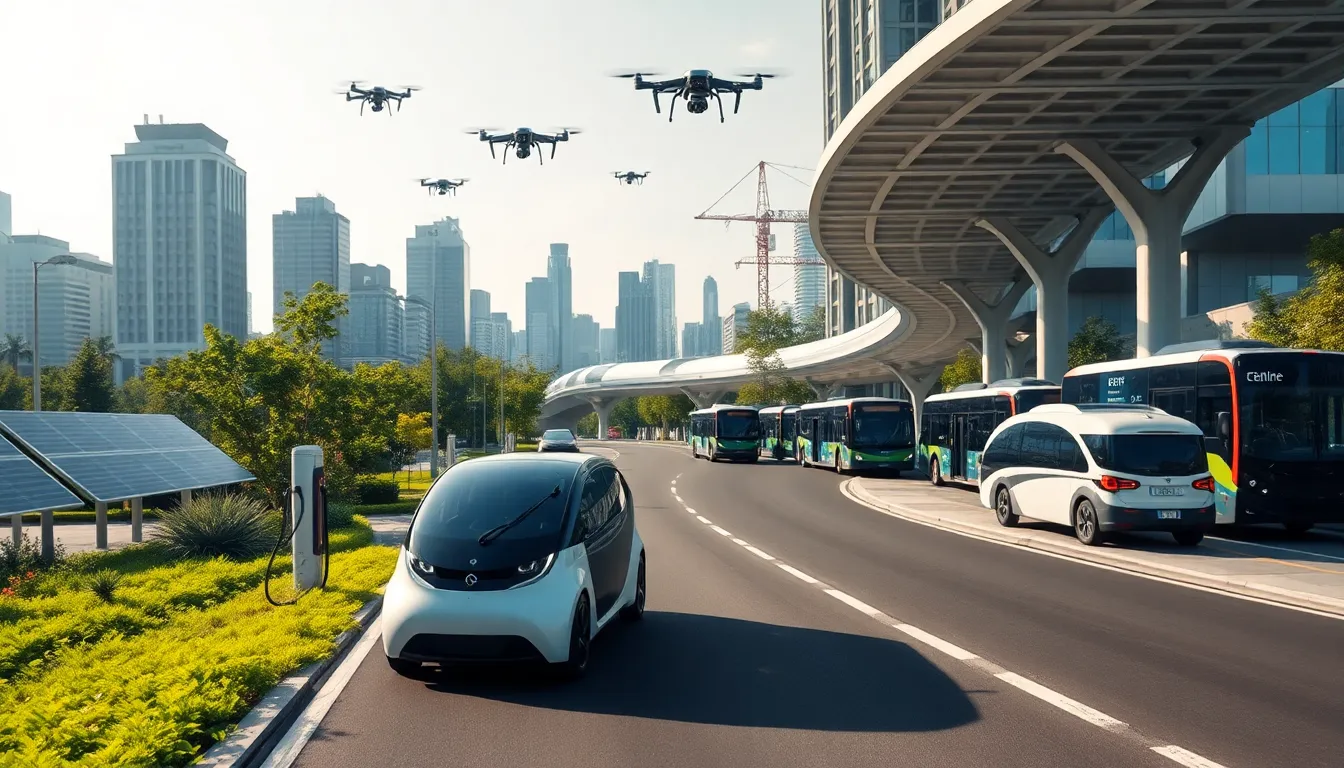
The transportation landscape is undergoing a dramatic transformation driven by innovative technologies. These advancements not only enhance efficiency but also promise a more sustainable future. Here’s a snapshot of several groundbreaking technologies making waves in the transportation sector:
- Autonomous Vehicles: Once the stuff of science fiction, now a reality on our roads.
- Electric and Hybrid Vehicles: Vehicles powered by clean energy are quickly becoming the norm.
- Hyperloop and High-Speed Rail Systems: Reducing travel time at astonishing speeds.
- Drone Delivery and Aerial Mobility: Changing logistics and personal transport.
- Smart Public Transportation Systems: Enhancing user experience and efficiency.
- Sustainability Initiatives: Making transportation greener.
- Future Trends and Innovations: What lies ahead for these technologies?
As we explore each of these technologies, it becomes clear that the future of transportation is not just about getting from point A to point B: it’s about doing so in ways we never imagined.
Autonomous Vehicles
Autonomous vehicles are the crown jewels of emerging transportation technology. These self-driving wonders promise to revolutionize road safety, reduce congestion, and potentially eliminate the notorious human factor in vehicular accidents. Imagine a world where you could read a book or catch up on your favorite podcast while the car takes you to your destination.
Manufacturers like Tesla and Waymo are leading the charge, investing heavily in AI and machine learning to create vehicles that can navigate complex environments. These innovations are already visible on public roads, albeit with a few cautious miles. As regulatory frameworks evolve and technology continues to improve, the idea of fully autonomous cars might soon become commonplace.
Also, these vehicles could significantly lower fuel consumption and emissions by optimizing driving patterns. Less time spent in traffic means less idling and fewer emissions, making autonomous vehicles a key player in sustainable urban development.
Electric and Hybrid Vehicles
Electric and hybrid vehicles are redefining what it means to drive. With growing concerns about climate change, the automotive industry is pivoting toward cleaner alternatives. Electric Vehicles (EVs) are not just environmentally friendly: they’re also fun to drive, with impressive torque and almost silent operation.
Global leaders like Tesla, Nissan, and Chevrolet are competing fiercely in this space, offering an array of choices for consumers. Hybrid vehicles bridge the gap for those not quite ready to go fully electric, offering both gasoline engines and electric power. This innovative approach lets drivers enjoy the best of both worlds.
Governments worldwide are incentivizing this shift with rebates and tax credits, encouraging consumers to make the switch. Charging infrastructure is expanding rapidly, making it easier than ever to plug in and power up. The future of the automotive industry looks electrifying.
Hyperloop and High-Speed Rail Systems
Hyperloop technology, driven by visionary minds like Elon Musk, is turning heads with its promise to reduce travel time between major cities. Imagine zipping from San Francisco to Los Angeles in about 30 minutes, yes, please. This vacuum-sealed tube system is designed to carry passengers at speeds exceeding 700 miles per hour.
High-speed rail systems, already popular in countries like Japan and France, also offer a glimpse into the future of fast, efficient travel. These trains use advanced technology to operate at an impressive pace while being energy efficient.
The impact on global connectivity could be profound, enabling economic collaboration and making long-distance commute feasible. Hyperloop and high-speed rail are game changers, promoting environmentally sustainable transport alternatives.
Drone Delivery and Aerial Mobility
Have you ever daydreamed about having a pizza drop from the sky? Enter drones. Drone delivery and aerial mobility are not just playful concepts but are moving toward implementation across various sectors. Retail giants like Amazon are already testing drone delivery systems that could revolutionize how goods reach customers.
Drones are becoming not only a faster way to deliver items but are also beneficial in emergency services, such as delivering medical supplies to remote areas or assisting in disaster relief scenarios. Though regulations still pose hurdles, the potential benefits of aerial mobility are enormous.
Imagine hopping on a drone to avoid traffic on your commute. As battery technology and regulations improve, aerial transport will likely become a reality.
Smart Public Transportation Systems
Gone are the days of fumbling for change or waiting at a bus stop for what feels like an eternity. Smart public transportation systems are leveraging technology to offer real-time data, improving the user experience significantly. Think GPS tracking for buses or mobile apps showing arrival times, convenience at your fingertips.
Cities are integrating smart technology into transit systems, utilizing IoT devices and data analytics to optimize routes and schedules. Riders can access information via smartphone apps, making it easier to plan journeys. Besides, these systems can help alleviate traffic congestion by encouraging people to use public transit more frequently.
The advent of contactless payment systems is another feature creating a smoother experience. With an increasing emphasis on public transport, these innovations can play a pivotal role in reducing urban traffic woes and carbon emissions.
Sustainability and Environmental Impact
As the world grapples with climate change, transportation technologies are stepping up to the plate. Electric and hybrid vehicles produce fewer emissions than their traditional counterparts, presenting promising solutions for urban pollution. Also, autonomous vehicles have the potential to reduce traffic congestion, lowering overall emissions by optimizing driving patterns.
Public transport systems contribute significantly to reducing the carbon footprint, and as cities invest in smart tech, they can become even more effective. The Hyperloop and high-speed rail systems offer efficient alternatives to air travel, minimizing emissions associated with longer commutes.
Sustainability is no longer just an afterthought: it’s at the forefront of innovative transportation solutions. As these technologies evolve, they’ll play a crucial role in creating a cleaner, greener planet.
Future Trends and Innovations
The future of transportation technology is bright and full of possibilities. Emerging trends suggest a mixture of interconnectivity and automation. For instance, vehicle-to-vehicle communication is enhancing safety and optimizing traffic flow, while advances in AI are making transportation systems smarter and more efficient.
Besides, the integration of renewable energy sources in transportation will continue to grow. E-bikes and e-scooters are gaining traction as eco-friendly alternatives for short commutes, promoting healthier lifestyles while reducing reliance on fossil fuels.
As storage technology improves, electric vehicles will become more convenient, with longer ranges and shorter charging times, pushing us even closer to electric mobility’s tipping point. With continuous innovations, the transportation landscape will be one of the most dynamic sectors.

