

Picture this: you’re eagerly waiting for your groundbreaking 3D design to materialize before your very eyes. It’s a marvel of modern technology, but how long will it actually take? Spoiler alert: it’s not just magic: various factors influence that wait time. In this text, we’ll explore the many variables that can make your 3D printing adventure feel like a quick sprint or a marathon. Grab your coffee, and let’s jump into the intriguing realm of 3D printing timeframes.
Factors Affecting 3D Printing Time
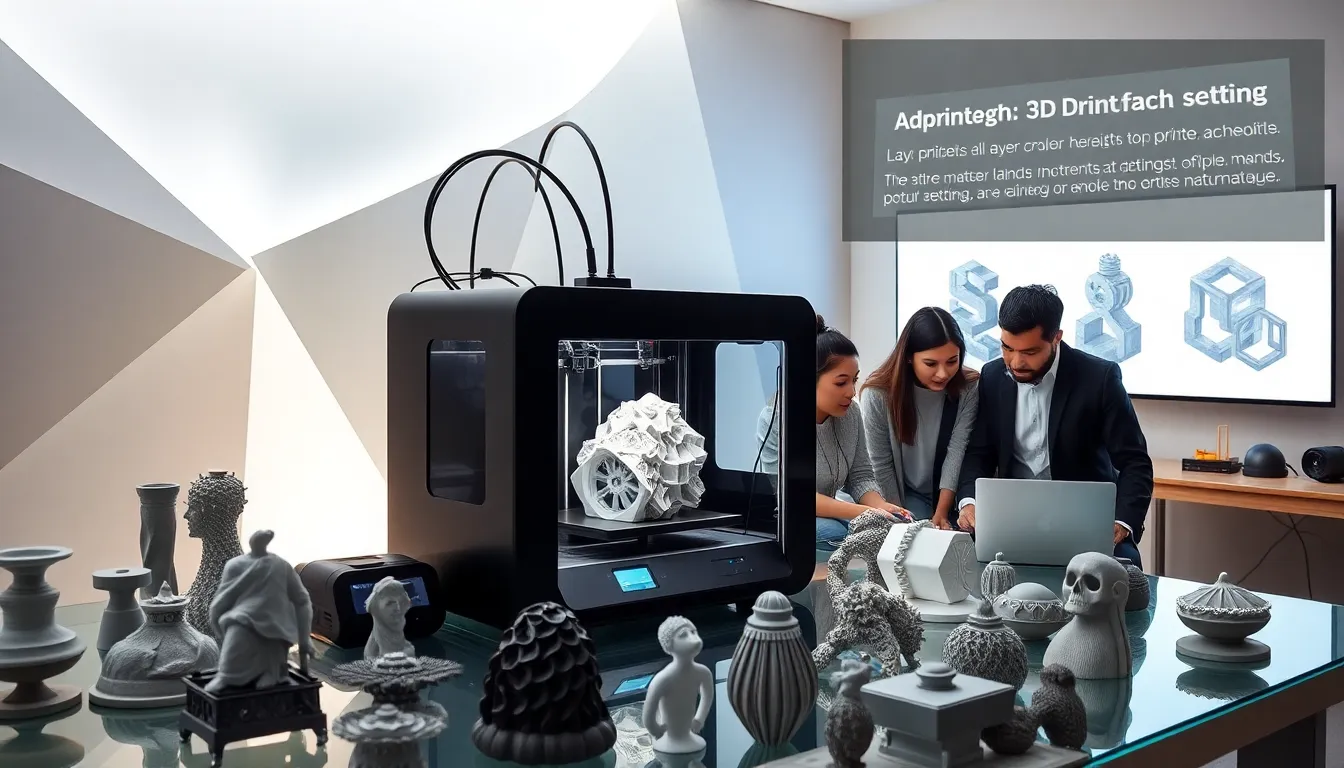
1. Size and Complexity of the Model
The dimensions of the model play a critical role in printing duration. Larger models inherently take longer, but complexity adds another layer of nuance. Intricate designs with detailed features require more meticulous printing, which means that a small yet complex piece can be just as time-consuming as a larger, simpler one.
2. Printing Technology Used
Different 3D printing technologies come with their own pace. For instance, Fused Deposition Modeling (FDM) printers are generally slower than Stereolithography (SLA) printers. Each technology has its benefits, but it’s vital to know that some methods are inherently designed for faster production than others.
3. Layer Height and Print Speed
Layer height is another major player in the game. Thicker layers mean quicker prints, but those intricate details might just vanish into the abyss. People often have to balance speed with resolution to meet their goals, compromising in one area can significantly affect the other.
4. Material Selection
Materials vary from plastics to metals, and each material has its own speed specifications. Some materials require longer printing durations due to their properties, like viscosity or curing time. When choosing your material, keep an eye on how it affects your timeline.
5. Printer Calibration and Settings
A well-calibrated printer can save hours of time. Misalignment or incorrect settings can lead to failed prints, necessitating reprints. Proper calibration ensures speed and precision, making it essential for those looking to maximize their efficiency.
Typical Timeframes for Different Projects
1. Prototyping
When it comes to prototyping, most projects can be completed in a few hours to a few days. The goal here is speed, engineers and designers want a functional model that can be tested and refined. Depending on the complexity, a basic prototype could print in under an hour.
2. Functional Parts
Functional parts usually take longer due to their needs for durability and detailed features. Expect these projects to range from several hours to a couple of days. Whether it’s a gear for a machinery component or a customized tool, every minute counts when optimizing for functionality and fit.
3. Artistic Creations
Artistic projects, on the other hand, may take longer due to their complexity and the level of detail involved. Artists might spend anywhere from a few hours to weeks perfecting their masterpieces, particularly if they incorporate multi-material prints or require post-processing work.
Comparing 3D Printing Times with Traditional Manufacturing
1. Speed Advantages of 3D Printing
When contrasting 3D printing with traditional manufacturing methods, such as injection molding, the advantages in speed become evident. Rapid prototyping permits design tweaks without delay, which is critical in industries like automotive and aerospace.
2. Limitations and Challenges
But, traditional manufacturing methods often produce high volumes more quickly. For larger-scale production runs, 3D printing could lag behind. It’s crucial for businesses to evaluate the quantity needs versus their timeline commitments. Sometimes, the fastest route isn’t the most efficient when looking at the big picture.
Best Practices to Optimize Printing Time
1. Design Considerations
Optimizing a model’s design can reduce print time effectively. Emphasizing simplicity without sacrificing quality can lead to swifter builds. Using techniques like hollowing out the model or combining features can help maximize speed.
2. Pre-Printing Preparations
Avoid the usual hiccups that can lead to delays. Set up the printer correctly, check material levels, and confirm that the design is ready for printing. Don’t forget to consider idle time caused by calibration, getting everything in order ahead of time can keep things running smoothly.

